
Mobile Tracked Jaw Crusher: Everything You Need to Know
- Updated 2026-07-30
- Views
- Source:
Introduction
Zhengzhou MiningAlliance Machinery Co., Ltd. has over 30 years of experience in manufacturing tracked jaw crushers. Below, I will provide a detailed analysis of all aspects of track mounted jaw crusher to help you comprehensive understanding before making an informed investment decision.
What Is a Tracked Jaw Crusher?
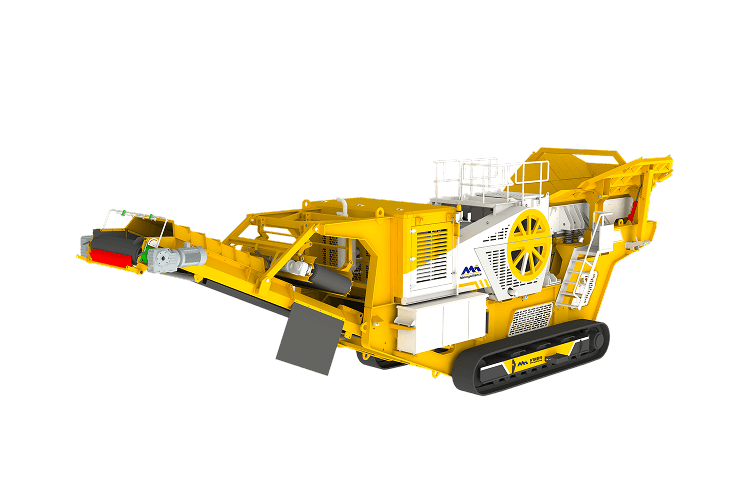
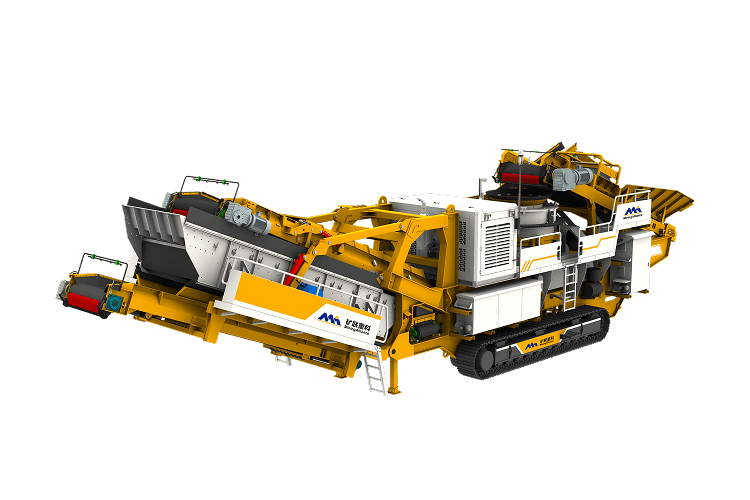
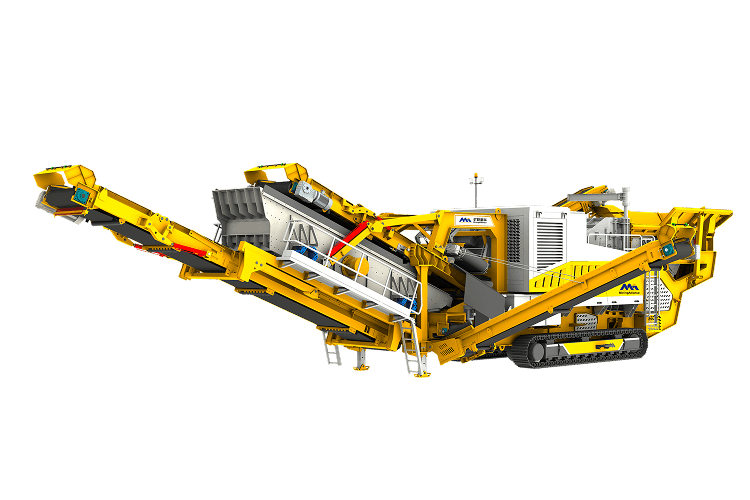
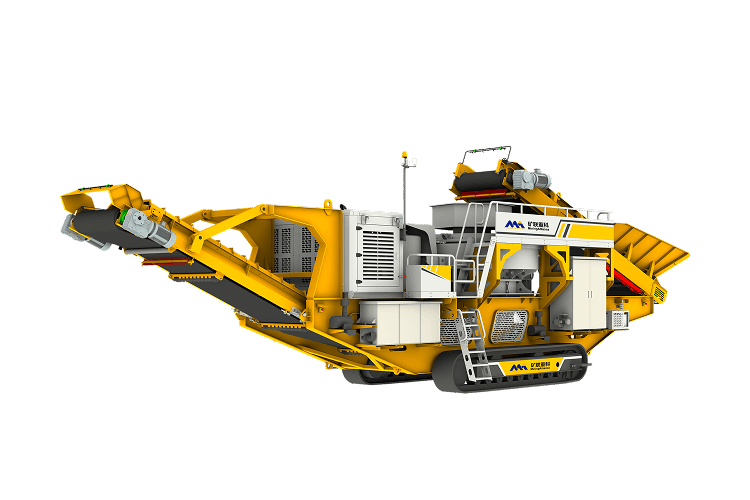
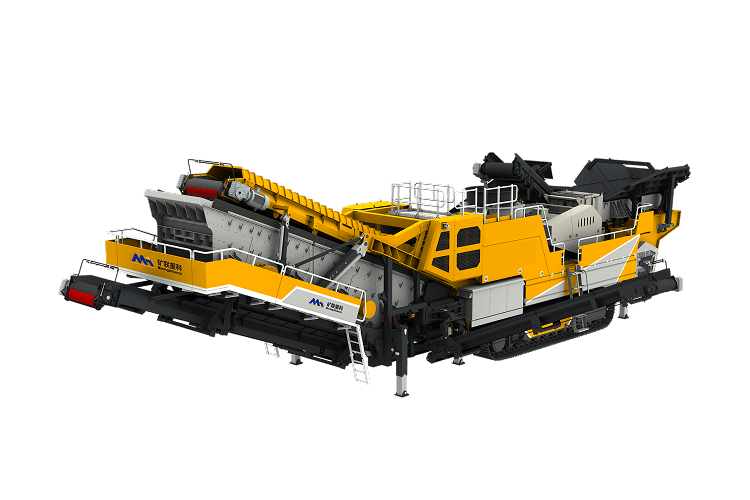
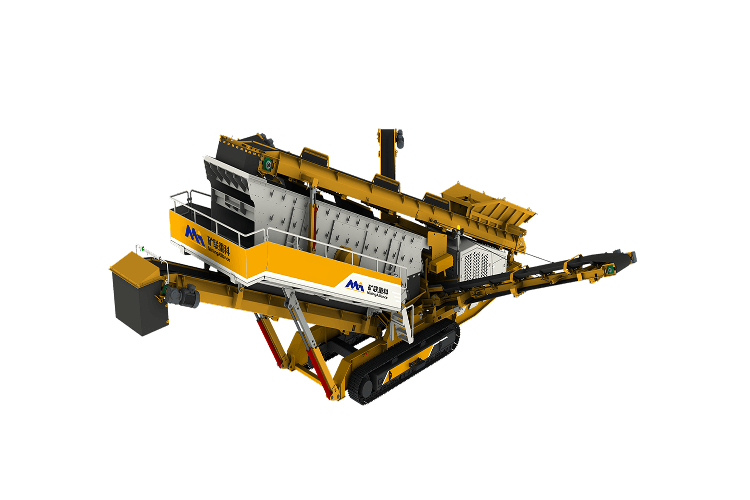
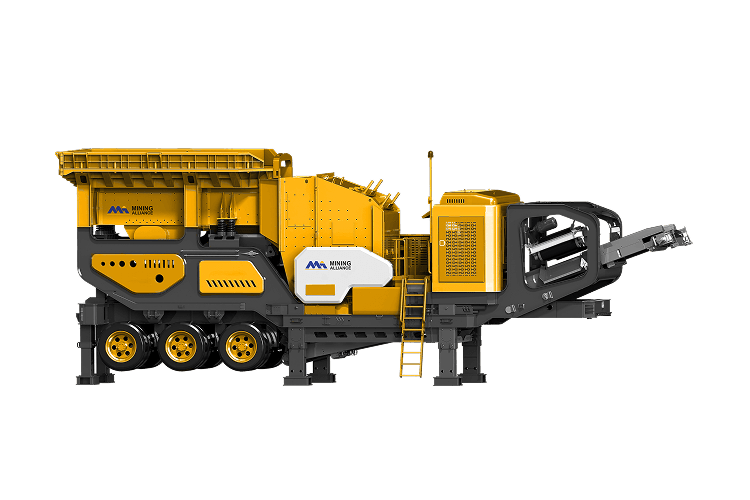
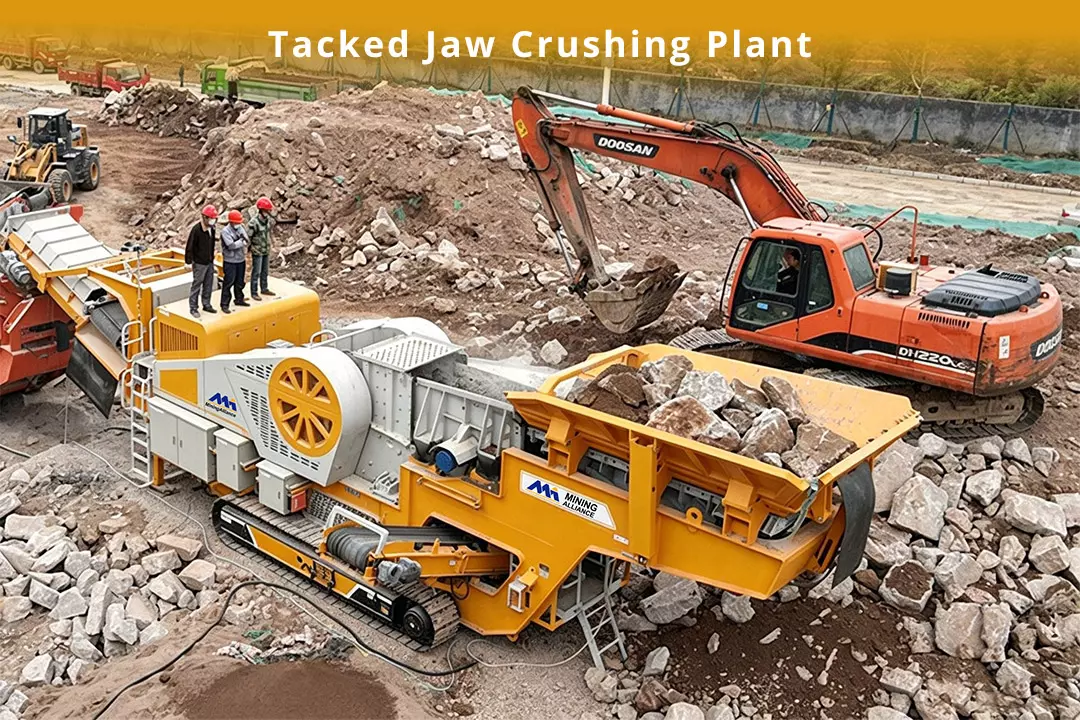
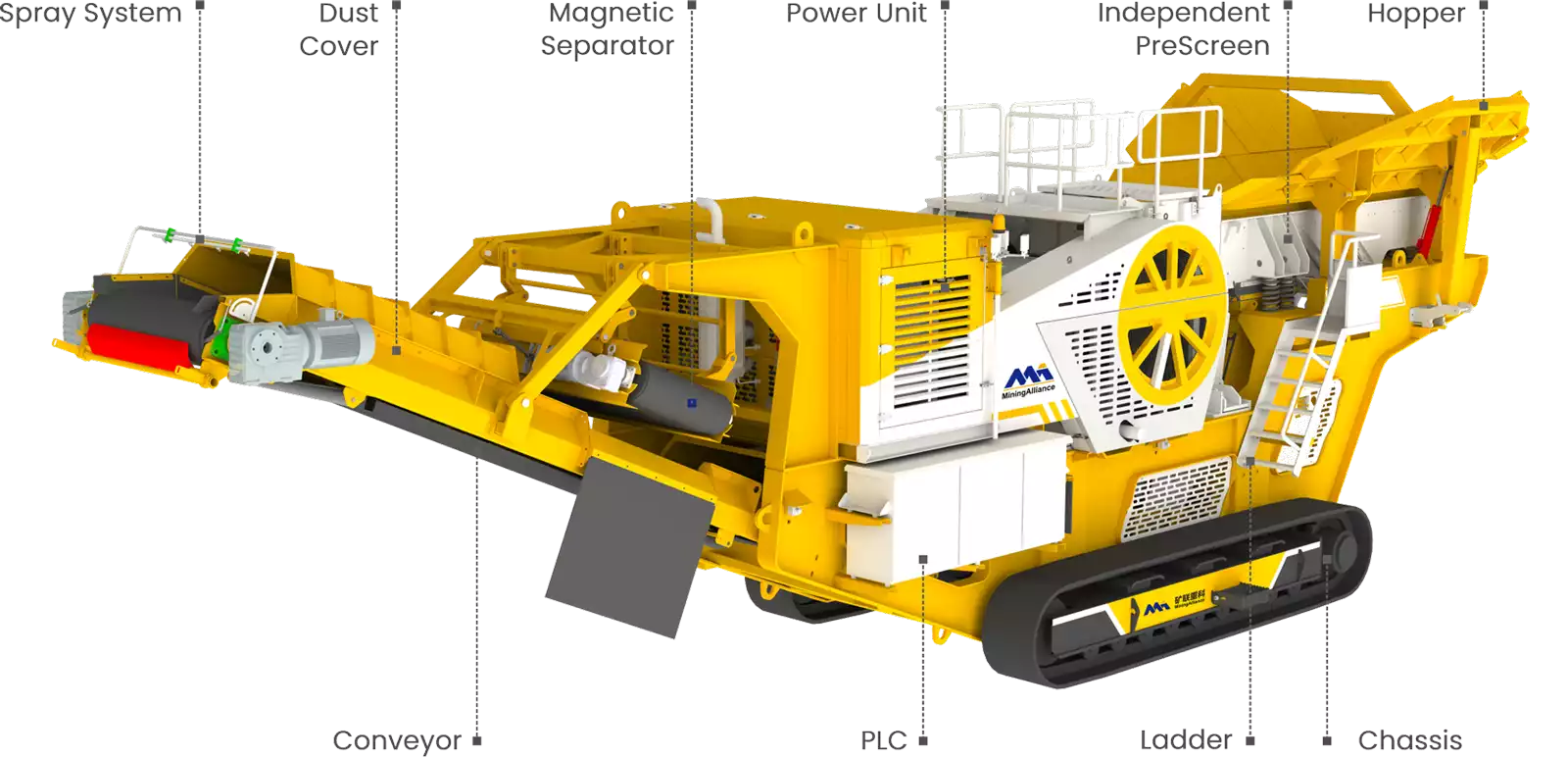
A tracked jaw crusher combines a jaw crusher with a crawler chassis to create fully mobile crushing equipment. It mounts feeding system, crushing system, conveying system, and power system all on a tracked chassis, forming a complete unit that can move independently and relocate quickly between sites.
Unlike a stationary crushing plant, a tracked jaw crusher doesn't need piling or a fixed foundation. You can move it between work sites whenever you need to, and it adapts well to narrow, complex working environments. It can run as a single unit, or pair with other mobile crushing equipment to form a complete mobile production line. (Related Post: Mobile vs stationary crushing plants comparison >>)
How Does a Tracked Jaw Crusher Work?
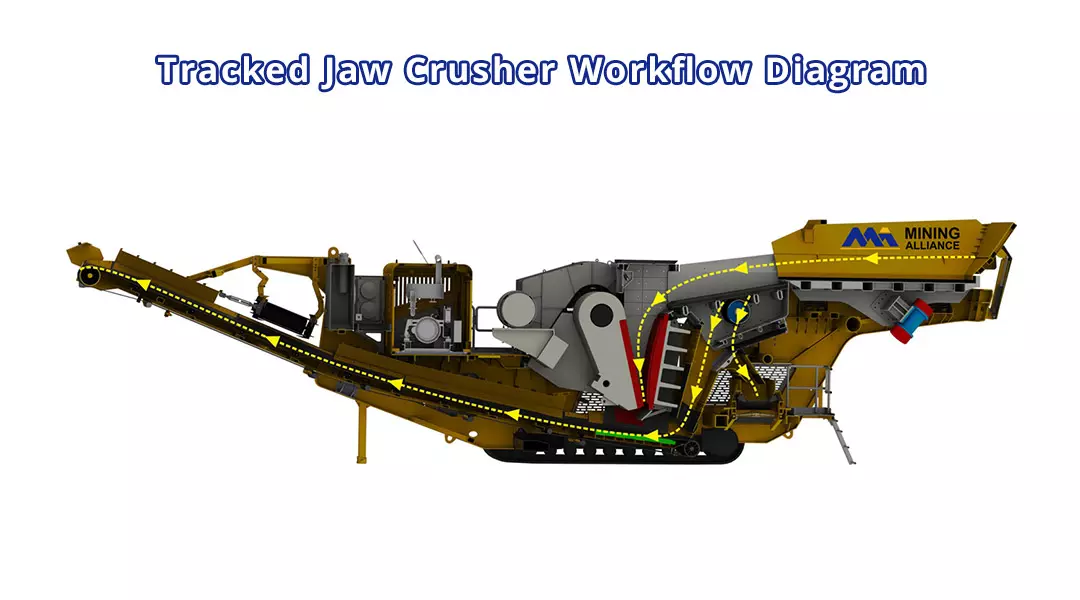
The tracked jaw crusher works on traditional jaw-crushing principle. The power system drives a belt pulley that rotates an eccentric shaft, which swings the moving jaw plate back and forth. When moving jaw closes in on the fixed jaw, two plates squeeze, split, and bend material between them until it breaks apart. When the moving jaw swings back away, gravity pulls the crushed material down and out through the discharge outlet. Below are its detailed working steps:
Step 1: Feeding Raw Material
A loader or excavator feeds raw material (rock, ore, construction waste, etc) into machine's hopper.
Step 2: Pre-screening and Feeding
A vibrating feeder carries material from hopper into jaw crusher at an even rate. Some higher-end machines use a double-layer vibrating feeder with a pre-screening function, filters out fines and impurities, reducing unnecessary load on it.
Step 3: Primary Crushing
Once material enters crushing chamber, the eccentric shaft drives moving jaw plate toward and away from fixed jaw plate in a repeating cycle. The material breaks under the powerful squeezing force between two plates.
Step 4: Discharge
Gravity pulls the crushed material down and out through the discharge outlet. Operators can adjust the size of this outlet to control the final product size.
Step 5: Conveying
A main belt conveyor carries discharged material away. Depending on production needs, you can stockpile it directly or feed it into another crushing stage for further processing.
Step 6: Closed-Loop System (Optional)
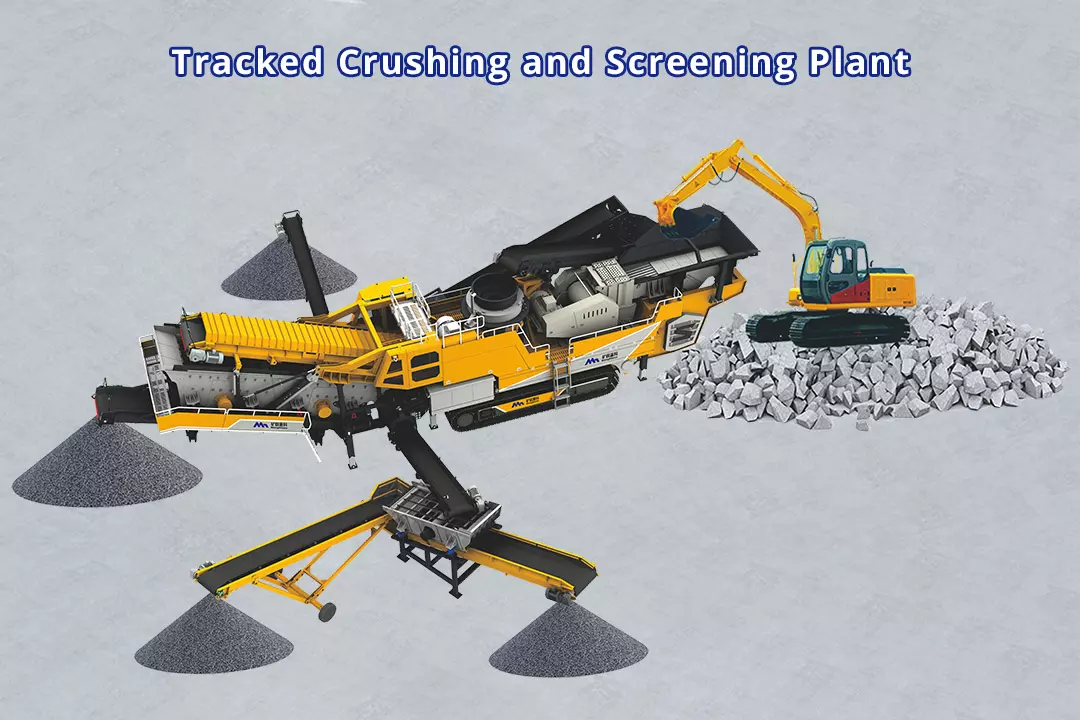
When needs a finer final product, you can add a circular vibrating screen to form a closed-loop system. This recirculates oversized material back through tracked jaw crusher until it reaches the target size, then discharges it.
Step 7: Relocating to the Next Site
Once the tracked jaw crusher finishes work at one location, its hydraulically controlled crawler chassis lets it move forward, backward, and turn, and quickly relocate to the next work site.
What Drive Types Does a Crawler Jaw Crusher Use?
The crawler jaw crusher mainly has five drive methods: direct drive + hydraulic drive, direct drive + electric drive, fully hydraulic drive, mains power drive, and diesel-electric drive.
Direct Drive + Hydraulic Drive
The "Direct Drive + Hydraulic Drive" uses a diesel engine, splitting output through a transfer case into two output shafts. The main output shaft connects to a clutch or hydraulic coupler that drives crusher directly. The second output shaft drives hydraulic pump group, which powers tracks, feeder, conveyor, and other auxiliary systems.
Advantages:
- Compact layout: The whole machine integrates structural design.
- High transfer efficiency: Diesel engine drives crusher directly, energy loss stays low.
- Mature technology: Main brands such as Metso, Sandvik, and MiningAlliance all use it, ensuring high reliability.
Disadvantage:
High operating cost: It relies entirely on diesel, fuel consumption is main operating cost, significantly higher than electric drive.
Direct Drive + Electric Drive
This method also uses a diesel engine, but splits output three ways through a transfer case: one drives main crusher, a second drives hydraulic system for tracks, and a third drives generator that powers feeder, conveyor, and other equipments.
Compared with "Direct Drive + Hydraulic Drive", this later maintenance is easier. However, because travel system needs more power, it requires larger hydraulic pump group, which raises production costs.
In addition, adding a generator and electric motors also places higher demands on overall machine layout. Additionally, relying on diesel engine as main power source results in higher fuel costs.
Full Hydraulic Drive
Fully hydraulic drive is commonly used in small tracked crushers. It uses a diesel engine as power source, with a series of pumps supplying pressurized oil to hydraulic system. A dedicated variable-displacement piston pump drives the crushing unit, pump and valve groups control other actuators, such as travel and feeding.
Advantages:
Lower production cost: Simple structure and easy control.
Smooth transmission and flexible control: Hydraulic drive runs smoothly and achieves stepless speed control. Paired with a load-sensing control system, it supplies oil on demand, smarter and more energy-efficient.
Disadvantages:
Suitable for small equipment: The high starting torque and high operating speed of main crusher, limit its application in large-scale tracked crushing equipment.
Higher maintenance costs: It demands very high performance from hydraulic components, and many key parts need to be imported, resulting operating and maintenance costs.
Mains Electric Drive
The "Mains Electric Drive" uses a small diesel engine to drive hydraulic pump, with an external mains power supply that runs crushing, feeding, and conveying systems.
Because electricity costs far less than diesel, this drive type keeps operating costs very low. In addition, without a large diesel engine or complex transfer case, it offers ample structural layout space and better maintainability.
However, the "Mains Electric Drive" must be connected to a power cable during operation, which severely limits its mobility and working radius, making it unsuitable for frequent site relocation or operations in remote areas.
Diesel-Electric Drive (Dual-Power Drive)
"Diesel-electric drive" represents future trend in tracked mobile crushing plants, utilizing both a diesel generator set and mains electric as power sources. All actuators (travel, crushing, feeding, etc.) are driven by electric motors. Those motors can pull power from an external mains electric or from the equipment's own diesel generator.
This drive method allows operators plug into mains power to reduce costs at sites that have it, and switch to an onboard diesel generator without power or ones that need frequent relocation.
However, it integrates two power systems, has higher manufacturing costs, more complex structure, and higher long-term maintenance costs.
What Are Wear Parts of Tracked Jaw Crushers?
- Moving jaw plate and fixed jaw plate: These are core working components of tracked jaw crusher. The movable jaw plate mounts on moving jaw and moves with it, fixed jaw plate fixes to frame with bolts. They direct contact with material and crush it through compression and splitting.
- Side guard plates: These install on both sides of crushing chamber, protect frame's side walls and prevent material from wearing frame.
- Toggle plate and toggle plate pad: The toggle plate transmits crushing force to drive moving jaw's crushing, and it acts as a safety fuse. If machine overloads or an uncrushable object enters chamber, toggle plate breaks first to protect main unit from damage.
- Bearings: Support eccentric shaft and moving jaw operation, keeping equipment running smoothly.
- Spring rods and spring assemblies: Hold moving jaw and toggle plate together, ensuring a tight fit between toggle plates, moving jaw, and frame, and maintaining normal operating condition of the crushing chamber.
What Should You Consider Before Buying a Track Mounted Jaw Crusher?
1. Material Characteristics (Most Critical Factor)
Material hardness
Studies shows, rocks with a Mohs hardness <3.5 are soft rocks, while >3.5 are hard rocks.
Hard rock (granite, basalt, iron ore, and similar materials) places very different demands on equipment than mediumor low-hardness material (limestone, coal gangue, construction waste, and the like). Hard rock wears down jaw plates, toggle plates, and other wear parts much faster, so it calls for higher-grade wear parts.
Moisture content
Excessive moisture content will affect screening efficiency and discharge smoothness, may require a pre-screening system.
Feed size
Confirm machine's maximum feed size fits your material. For example, if your material maximum size is 300 mm, choose a model with a maximum feed size of ≥300 mm.
2. Capacity Requirements
Choose a model that matches your target output. Focus on real processing capacity rather than theoretical values, and ask track jaw crusher manufacturers for third-party test data under same working conditions. Mainstream models generally range from 80 to 500 t/h.
3. Discharge Size Requirements
Make sure crusher's discharge opening adjusts to a range that meets your finished product size. For example, if you need a final product around 45 mm, choose a model whose discharge opening can adjust to 40 mm or smaller.
4. Operating Site Conditions
- Terrain: Complex terrain such as mountainous or wetland areas requires track mobile jaw crushing plants (with strong mobility).
- Site space: Narrow sites require compact equipment with a small turning radius.
- Power supply: Sites with stable mains power can use a mains drive to reduce costs, remote mines without power access need diesel or diesel-electric drive.
5. Drive Type Selection
Choose the drive type based on your real working conditions:
- Field operations with frequent relocation: direct drive + hydraulic drive, or diesel-electric drive.
- Fixed sites with stable mains power: mains drive, for the lowest operating cost.
- Balancing flexibility and cost: diesel-electric (dual power) drive.
6. Key Components Quality
Jaw plate material: Reputable manufacturers use high-manganese steel alloy (such as ZGMn13), which wears well and lasts longer. Watch out for cheap equipment that uses inferior jaw plates.
Chassis material: Cast steel chassis are better than cast iron chassis, although more expensive, they offer better strength and durability.
7. Level of Intelligent Control
Pay attention to a PLC control system, remote monitoring, fault diagnostics, and similar smart features. The more intelligent these systems are, the more user-friendly the operation and the lower the failure rate.
8. Manufacturer's Overall Strength
- Complete machine compatibility: Verify manufacturer possesses the ability to manufacture entire machine rather than simply assembling components.
- After-sales support: Check density of their service network and spare parts supply cycle.
- Industry reputation: Visit factory in person if you can, and check what others in the industry say about them.
9. Total Lifecycle Cost
Don't focus on purchase price alone. Comprehensively evaluate:
- Initial purchase cost
- Fuel/electricity consumption costs
- Wear part replacement cost
- Maintenance cost
- Downtime Losses
How Much Does a Tracked Jaw Crusher Cost?
The price of a tracked jaw crusher generally ranges from $15,000 to $1250,000, depending on factors such as brand, model, processing capacity, drive type, and material. The table below shows estimated prices for different processing capacities:
| Equipment Grade | Processing Capacity (TPH) | Price Range (USD) |
|---|---|---|
| Small Scale | 10-50 TPH | $15,000 - $85,000 |
| Small to Medium Scale | 50-100 TPH | $85,000 - $200,000 |
| Medium Scale | 100-200 TPH | $200,000 - $550,000 |
| Large Scale | 200-500 TPH | $550,000 - $1250,000 |
Note:
1. The global market for tracked mobile jaw crushers was about $425 million in 2024.
2. The prices above are for reference only; actual prices will vary depending on specific configurations, materials, brand, and other factors.
3. In addition to the price of the equipment itself, additional costs such as transportation, installation and commissioning fees, tariffs (for export), and spare parts procurement must also be considered.
Conclusion
Choosing the right tracked jaw crusher comes down to matching machine to your material, work site, and production targets. At the same time, choosing a reliable manufacturer is also very important.
MiningAlliance Machinery is committed to providing customers with end-to-end services, from equipment selection, installation, and commissioning to business plan design.
If you have specific crushing requirements (such as material type, target production capacity, and final product particle size), please feel free to contact us for a free, customized solution and an exact quote.